
 March 2, 2026
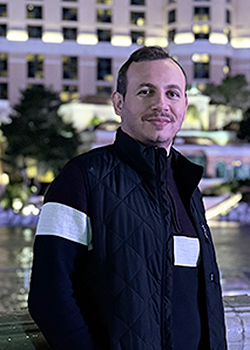
Hoshmand Malaie, Cognititve and Information Sciences
Hoshmand Malaie’s story is one of resilience, curiosity and vision. From the debates of his childhood home in Kurdistan to the computational models of his lab in California, he continues to ask bigger questions — questions that connect the struggles of his past, the rigor of his present and the hopes he carries for the future.
Malaie’s journey begins in Kurdistan, in a small town where beauty and hardship lived side by side. Growing up in Iran as a Kurd meant facing limited opportunities and systemic discrimination, but it also meant being immersed in a household alive with debate. His father’s probing questions about history sparked conversations on politics, philosophy and everyday dilemmas. These discussions instilled in Malaie a habit of digging deeper — a habit that would become the foundation of his academic life.
That curiosity eventually led him to cognitive science, a field that mirrors the complexity of his upbringing. For Malaie, cognitive science was not just an academic discipline but a lens through which to explore human behavior from multiple perspectives — psychology, philosophy, neuroscience, computer science, linguistics and anthropology. His activism in human rights and his personal questions about depression and suicide pushed him to ask how biases and decisions form in the brain. UC Merced became the natural choice for graduate study, with its diverse faculty and genuine embrace of interdisciplinary curiosity.
At UC Merced, he found a mentor who shaped his path in profound ways. Professor David Noelle guided him not by providing answers but by asking questions that challenged his assumptions. In Noelle’s office, academic puzzles and personal challenges could be discussed side by side, creating a space where growth was nurtured through both rigor and kindness. That balance of challenge and encouragement became a cornerstone of Malaie’s development as a researcher.
His research now focuses on the prefrontal cortex — the brain’s hub for attention, memory and cognitive control. At the Computational Cognitive Neuroscience Lab, he builds computational models to understand how people make decisions under risk. Though theoretical, his work carries the promise of real-world impact: improving healthcare, shaping economic decisions and helping individuals make better choices. It is research that bridges the abstract with the practical, the scientific with the human.
Beyond academia, Malaie’s proudest achievement is personal. His daughter, Viyana, inspires him daily. She reminds him that the questions he asks about the mind and life are not just academic — they are deeply human. Conferences, publications and contributions to UC Merced’s Cognitive and Information Sciences community mark his professional milestones, but it is fatherhood that grounds his journey, giving it purpose and direction.


